sábado, 10 de junho de 2023

Dia de Portugal, em Lisboa. 10 de Junho, 2023. Quase só imagens de Lisboa: Estrela, C. Combro, Madragoa e S. Bento,

                                                                 Imagens das 7:45 às 19:15


Alameda tão perfumada pelas tílias...


Eflúvios dourados que podem ligar a terra e o Céu nas nossas almas.

Amigo esoterista alfarrabista e de longa data, José Ferreira, à calçada do Carmo. Bom diálogo, não gravado.


Um dos mestres perenes de Portugal, nosso santo António.
Arcanjo Mikael, que não é o subtílissimo Arcanjo de Portugal... Saudações a ambos!

Celebração dos anos do amigo antroposófico e mestre de artes marciais Fernando Machado, no jardim da Basílica da Estrela, com grupo simpático de amigos.
Grande verdade: Da CNN aos Milhazes e Rogeiros, das músicas das discotecas aos tubos de escapes, a voz do silêncio, que é de ouro, é impedida e não cultuada em muitas zonas de Lisboa. Tinha razão o amigo Afonso Cautela quando chamava ao "ruído, esse fascismo quotidiano"

sexta-feira, 9 de junho de 2023

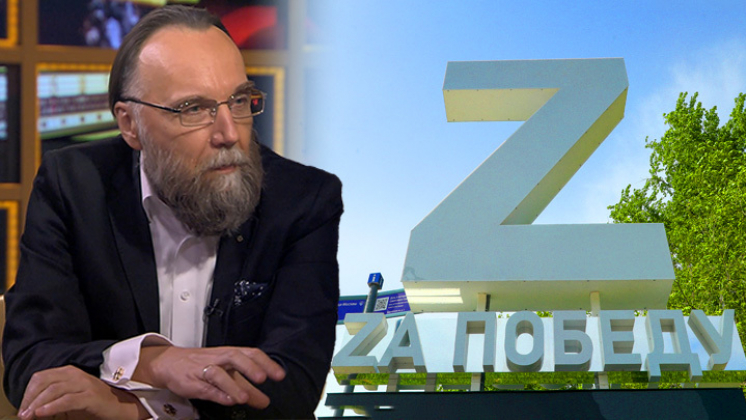
Alexander Dugin, and his vision about the Special Military Operation and the war of the West against Russia and its traditional values.

 The last Russian battle: six main positions

Alexander Dugin,  in May 2023.


«The Special Military Operation as a major event in world history

Many are beginning to realise that what is happening cannot be explained in any way by the analysis of national interests, economic trends or energy policy, territorial disputes or ethnic tensions. Almost all the experts who try to describe what is happening with the usual pre-war terms and concepts appear at least unconvincing and often simply stupid.

To even superficially understand the state of things, one has to turn to much deeper and more fundamental categories, to everyday analyses that are hardly ever called into question.

The need for a global context

What is still called 'Special Military Operation' in Russia, and which is in fact a real war with the collective West, can only be understood in the context of large-scale approaches such as:

• geopolitics, based on the consideration of the deadly duel between the civilisation of the sea and the civilisation of the land, which identifies the final aggravation of the great continental war;
• civilisation analysis - the clash of civilisations (modern Western civilisation claiming hegemony against the emerging non-Western alternative civilisations)
• definition of the future architecture of the world order - the contradiction between a unipolar and a multipolar world;
• the culmination of world history - the final phase of the emergence of a Western model of global dominance facing a fundamental crisis;
• a macro-analysis of political economy built on the fixation of the collapse of global capitalism;
• finally, religious eschatology describing the 'last times' and their inherent conflicts, clashes and disasters, as well as the phenomenology of the coming of the Antichrist.

All other factors - political, national, energy, resource, ethnic, legal, diplomatic, and so on - although important, are secondary and subordinate. At the very least, they do not explain or clarify anything substantial.

We place SMO in six theoretical frameworks, each of which represents entire disciplines. These disciplines have received little attention in the past, preferring more 'positive' and 'rigorous' fields of study, so they may seem 'exotic' or 'irrelevant' to many, but understanding truly global processes requires considerable distance from the private, the local and the detailed.

SMO in the context of geopolitics

All geopolitics is based on the consideration of the eternal opposition between the civilisation of the sea (thalassocracy) and the civilisation of the land (tellurocracy). A vivid expression of these beginnings in antiquity were the clashes between land-based Sparta and port-based Athens, land-based Rome and maritime Carthage.

The two civilisations differ not only strategically and geographically, but also in their main orientation: the land-based empire is based on sacred tradition, duty and hierarchical verticality led by a sacred emperor. It is a civilisation of the spirit.

Maritime powers are oligarchies, a trading system dominated by material and technical development, they are essentially pirate states, their values and traditions are contingent and ever-changing, like the sea itself. Hence their intrinsic progress, especially in the material sphere, and, conversely, the constancy of their way of life and the continuity of the civilisation of the mainland, the eternal Rome.

When politics became globalised and conquered the entire globe, the two civilisations finally became spatially embodied. Russia and Eurasia became the core of the land civilisation, while the pole of the sea civilisation is anchored in the Anglo-Saxon zone of influence: from the British Empire to the United States and the NATO bloc.

This is how geopolitics sees the history of the last centuries. The Russian Empire, the USSR and modern Russia inherited the baton of land-based civilisation. In the context of geopolitics, Russia is the eternal Rome, the Third Rome. And the modern West is the classical Carthage.

The collapse of the USSR was the most important victory for the civilisation of the sea (NATO, the Anglo-Saxons), and a terrible disaster for the civilisation of the land (Russia, the Third Rome).

Thalassocracy and Tellurocracy are like two communicating vessels, which is why those territories, having left Moscow's control, began to come under the control of Washington and Brussels. First, this concerned Eastern Europe and the secessionist Baltic republics. Then it was the turn of the post-Soviet states. The civilisation of the sea continued the great continental war with the main enemy, the civilisation of the land, which suffered a heavy blow but did not collapse completely.

At the same time, the defeat of Moscow led to the creation of a colonial system in Russia itself in the 1990s - the Atlanticists flooded the state with their agents placed in the highest positions. This is how the modern Russian elite was formed: an extension of the oligarchy, a system of external control by the civilisation of the sea.

Some former soviet republics began preparing for full integration into the civilisation of the sea. Others followed a more cautious strategy and were in no hurry to break their historically established geopolitical ties with Moscow. Two camps were thus formed: the Eurasian camp (Russia, Belarus, Kazakhstan, Kyrgyzstan, Tajikistan, Uzbekistan and Armenia) and the Atlantic camp (Ukraine, Georgia, Moldova and Azerbaijan). Azerbaijan, however, moved away from this extreme position and moved closer to Moscow.

This led to the events of 2008 in Georgia and then, after the pro-NATO coup in Ukraine in 2014, to the secession of Crimea and the uprising in the Donbass. Part of the territories of the newly formed units did not want to join the Sea Civilisation and rebelled against these policies, seeking Moscow's support.

This led to the start of the SMO in 2022. Moscow, as a land-based civilisation, became strong enough to come into direct confrontation with the Sea Civilisation in Ukraine and to reverse the trend of strengthening Thalassocracy and NATO at the expense of Tellurocracy and the Third Rome. This brings us to the geopolitics of today's conflict. Russia, like Rome, is fighting against Carthage and its colonial satellites.

What is new in geopolitics is that Russia-Eurasia cannot act as the sole representative of civilisation on earth today. Hence the concept of a distributed Heartland. Under the new conditions, not only Russia, but also China, India, the Islamic world, Africa and Latin America are emerging as poles of the civilisation of the earth.

Furthermore, assuming the collapse of the civilisation of the sea, the western 'great spaces' - Europe and America itself - could become corresponding 'Heartlands'. In the United States, this is almost openly wished for by Trump and the Republicans, who are aiming precisely at the red and inland states of the continent. In Europe, populists and proponents of the concept of 'Fortress Europe' intuitively gravitate towards such a scenario.

The Operation in the context of a clash of civilisations

The purely geopolitical approach corresponds to the civilisational one. But, as we have seen, a proper understanding of geopolitics itself already includes a civilisation dimension.

At the level of civilisation, two main vectors collide in the SMO: Liberal-democratic individualism, atomism, the dominance of the techno-material approach to man and society, the abolition of the state, gender politics, in essence the abolition of the family and gender itself, and at the limit a transition to the dominance of Artificial Intelligence (all called 'progressivism' or 'the end of history');
fidelity to traditional values, the wholeness of culture, the superiority of spirit over matter, the preservation of family, power, patriotism, the preservation of cultural diversity and, finally, the salvation of man himself.

After the defeat of the USSR, Western civilisation made its strategy particularly radical, insisting on fine-tuning - and now! - its attitudes. Hence the forced imposition of multiple genders, dehumanisation (AI, genetic engineering, deep ecology), state-destroying 'colour revolutions', etc. Moreover, Western civilisation has openly identified itself with the whole of humanity, inviting all cultures and peoples to follow it immediately. Moreover, this is not a suggestion, but an order, a sort of categorical imperative of globalisation.

To some extent, all societies have been influenced by modern Western civilisation. This includes our own, where, since the 1990s, a westernised liberal approach has prevailed. We have adopted liberalism and postmodernism as a kind of operating system and have not been able to get rid of it, despite 23 years of Putin's sovereign course.

But today, the direct geopolitical conflict with NATO and the collective West has aggravated even this civil confrontation. Hence Putin's appeal to traditional values, the rejection of liberalism, gender politics, etc.

Although not yet fully understood by our society and ruling elite, the Operation is a direct confrontation between two civilisations:

• the liberal, globalist postmodern West and the
• traditional society, represented by Russia and those who maintain at least some distance from the West.

The war thus shifts to the level of cultural identity and acquires a profound ideological character. It becomes a war of cultures, a fierce confrontation of Tradition against the Modern and Postmodern.

The Special Military Operation in the context of the confrontation between unipolarism and multipolarism

In terms of the architecture of world politics, the SMO is the point at which it is determined whether the world will be unipolar or become multipolar. The victory of the West over the USSR ended the era of the bipolar organisation of world politics. One of the two opposing camps disintegrated and exited the scene, while the other remained and declared itself the main and only one. At that moment, Fukuyama proclaimed 'the end of history'.

On a geopolitical level, as we have seen, it corresponded to a decisive victory of the civilisation of the sea over the civilisation of the land. More cautious experts in international relations (C. Krauthammer) called the situation a 'unipolar moment', pointing out that the resulting system had the possibility of becoming stable, i.e. a truly 'unipolar world', but might not hold up and give way to another configuration.

This is exactly what is being decided in Ukraine today: a Russian victory would mean that the 'unipolar moment' is irreversibly over and that multipolarity has arrived as something irreversible. Otherwise, the supporters of a unipolar world will have the chance to delay their end, at least at all costs.

Here again, we must refer to the geopolitical concept of the 'distributed Heartland', which makes an important correction in classical geopolitics: if the civilisation of the Sea is now consolidated and represents something unitary, a planetary system of liberal globalism under the strategic leadership of Washington and NATO command, then, although the directly opposing civilisation of the Earth is represented by Russia alone (which refers to classical geopolitics), Russia fights not only for itself, but for the principle of the Heartland, recognising the legitimacy of the land.

This is why Russia embodies a multipolar world order, in which the West is entrusted with the role of a single region, one of the poles, with no reason to impose its own criteria and values as something universal.

The Special Military Operation in the context of world history

Modern Western civilisation, however, is the result of the historical vector that has developed in Western Europe since the beginning of the modern age. It is neither a deviation nor an excess. It is the logical conclusion of a society that has taken the path of desacralisation, de-Christianisation, rejection of the spiritual vertical, the path of the atheistic man and material prosperity. This is what is called 'progress' and this 'progress' includes the total rejection and destruction of the values, foundations and principles of traditional society.

The last five centuries of Western civilisation are the story of the struggle of modernity against tradition, of man against God, of atomism against wholeness. In a sense, it is a story of struggle between West and East, as the modern West has become the embodiment of 'progress', while the rest of the world, especially the East, has been perceived as a territory of Tradition, the sacred way of life preserved.

Western-style modernisation was inseparable from colonisation, because those who imposed their rules of the game ensured that they only worked in their favour. Thus, gradually, the whole world came under the influence of Western modernity and, from a certain point onwards, no one could afford to question the validity of such a 'progressive' and profoundly Western world image.

Modern Western liberal globalism, Atlanticist civilisation itself, its geopolitical and geostrategic platform in the form of NATO, and ultimately the unipolar world order itself are the culmination of historical 'progress' as deciphered by Western civilisation itself. It is precisely this kind of 'progress' that is being challenged by the conduct of the SMO.

If we are faced with the culmination of the West's historical movement towards that goal that was outlined 500 years ago and is now almost achieved, then our victory in the SMO will mean - no more and no less - a dramatic change in the entire course of world history. The West was on its way to its goal, and at the last stage Russia obstructed this historic mission, turned the universalism of 'progress' as understood by the West into a local private regional phenomenon, deprived the West of its right to represent humanity and its destiny.

This is what is at stake and what is being decided today in the trenches of the SMO.

The SMO in the context of the global crisis of capitalism

Modern Western civilisation is capitalist. It is based on the omnipotence of capital, the dominance of finance and banking interests. Capitalism became the destiny of modern Western society from the moment it broke with Tradition, which rejected obsession with the material aspects of being and sometimes severely restricted certain economic practices (such as interest growth) as something deeply ungodly, unjust and immoral.

Only by ridding itself of religious taboos has the West been able to fully embrace capitalism. Capitalism is inseparable neither historically nor doctrinally from atheism, materialism and individualism, which in a fully spiritual and religious tradition are not tolerated at all.

It is precisely the unbridled development of capitalism that has led Western civilisation to atomisation, atomisation, the transformation of all values into commodities and, ultimately, the equating of man himself to a thing.

Critical philosophers of the modern West have unanimously identified nihilism in this capitalist explosion of civilisation. First there was the 'death of God' and then, logically, the 'death of man', who lost all fixed content without God; hence post-humanism, AI and man-machine fusion experiments. This is the culmination of 'progress' in its liberal-capitalist interpretation.

The modern West is the triumph of capitalism at its historical apogee. Once again, the reference to geopolitics clarifies the whole picture: the civilisation of the sea, Carthage, the oligarchic system and were based on the omnipotence of money. Had Rome not won the Punic Wars, capitalism would have arrived a couple of millennia earlier: only Rome's valour, honour, hierarchy, service, spirit and sacredness could have stopped the Carthaginian oligarchy's attempt to impose its own world order.

The successors of Carthage (the Anglo-Saxons) were luckier and in the last five centuries have finally managed to accomplish what their spiritual ancestors failed to do: impose capitalism on humanity.

Of course, today's Russia does not even remotely imagine that SMO is a revolt against global capital and its omnipotence.

And that is exactly what it is.

SMO in the context of the End Times

One usually looks at history as progress. However, this view of the essence of historical time has only recently taken root since the Enlightenment. The first comprehensive theory of progress can be said to have been formulated in the mid-18th century by the French liberal Ann Robert Jacques Turgot (1727-1781). It has since become dogma, even though it was originally only part of liberal ideology, which is not shared by all.

In terms of the theory of progress, modern Western civilisation represents its highest point. It is a society in which the individual is virtually free of all forms of collective identity, that is, as free as possible. Free from religion, ethnicity, state, race, property, even gender, and tomorrow from the human race. This is the final frontier that progress intends to reach.

Then, according to liberal futurologists, there will be the moment of the singularity, when human beings will cede the initiative of development to artificial intelligence. Once upon a time (according to the same theory of progress) apes passed the baton to the human species. Today, humanity, having risen to the next stage of evolution, is ready to hand over the initiative to neural networks. This is what the modern globalist West is directly leading to.

However, if we abstract from the liberal ideology of progress and turn to the religious worldview, we get a completely different picture. Christianity, as well as other religions, sees world history as a regression, as a turning away from paradise. Even after the coming of Christ and the triumph of the universal Church there must come a time of apostasy, a time of great suffering and the coming of the Antichrist, the son of perdition.

This is bound to happen, but the faithful are called to stand up for their truth, to remain faithful to the Church and to God, and to resist the Antichrist even under these extremely difficult conditions. What for a liberal is 'progress', for a Christian is not merely 'regress', but an unholy parody.

The last phase of progress - total digitisation, migration to the meta-universe, the abolition of gender and the overcoming of man with the transfer of initiative to artificial intelligence - in the eyes of the believer of any traditional denomination is direct confirmation that the Antichrist has come into the world and this is his civilisation.

Thus we get another dimension of the Operation, which the President of Russia, the Minister of Foreign Affairs, the Secretary of the Security Council, the head of the SVR and other high-ranking officials of Russia, seemingly far removed from any mysticism or profanity, are increasingly speaking directly about. But that is exactly what they are: they are stating the pure truth, which is consistent with the traditional societal view of the modern Western world.

This time it is not a metaphor, that opposing sides of the conflict have sometimes rewarded each other. Now it is something more. Western civilisation, even in modern times, has never been so close to a direct and overt embodiment of the Antichrist's reign. Religion and its truths have long since been abandoned by the West in favour of an aggressive secularism and an atheistic, materialistic worldview assumed as absolute truth.

However, it had not yet invaded the very nature of man, stripping him of his gender, his family and, soon, his very human nature. Western Europe set out 500 years ago to build a society without God and against God, but this process has only now reached its climax. This is the religious and eschatological essence of the 'end of history' thesis.

It is essentially a declaration, in the language of liberal philosophy, that the coming of the Antichrist has happened. At least, that is how it appears in the eyes of people of religious denominations belonging to mainstream society.

SMO is the beginning of the eschatological battle between sacred Tradition and the modern world, which precisely in the form of liberal ideology and globalist politics has reached its most sinister, toxic and radical expression. This is why we increasingly speak of Armageddon, the last decisive battle between the armies of God and Satan.

The role of Ukraine

At all levels of our analysis, it turns out that the role of Ukraine itself in this crucial confrontation, however one interprets it, is on the one hand key (it is the Armageddon camp). On the other hand, the Kiev regime is not even remotely an independent entity. It is just a space, a territory where two absolute global cosmic forces converge. What may appear to be a local conflict based on territorial claims is, in reality, anything but.

Neither side cares about Ukraine per se. The stakes are much higher. As it happens, Russia has a special mission in world history: to thwart a civilisation of pure evil at a critical juncture in world history, and by initiating Operation Military, the Russian leadership has undertaken this mission, and the border between two ontological armies, between two fundamental vectors of human history, lies precisely on the territory of Ukraine.

Its authorities have sided with the devil: hence all the horror, terror, violence, hatred, vicious repression of the Church, degeneration and sadism in Kiev. But the evil is deeper than the excesses of Ukrainian Nazism: its centre is outside Ukraine, and the forces of the Antichrist are simply using Ukrainians to achieve their goals.

The Ukrainian people are divided not only along political lines, but also in spirit. Some are on the side of the civilisation of the earth, of Holy Russia, on the side of Christ. Others - on the opposite side. Thus society is divided along the most fundamental boundary - eschatological, of civilisation and simultaneously geopolitical. Thus the very land that was the cradle of ancient Russia, of our nation, has become the area of the great battle, even more significant and extensive than the mythical Kurakshetra, the subject of Hindu tradition.

The forces that have converged on this field of destiny, however, are so fundamental that they many times transcend any inter-ethnic contradictions. It is not just a division of Ukrainians into Russophiles and Russophiles, but a division of humanity on a much more fundamental basis.»

quinta-feira, 8 de junho de 2023

Do mistério da origem do ser humano Espiritual e da sua polaridade masculina e feminina. Versões esotéricas. As perigosas alterações de identidade e género actuais..

Geração primordial, por Bô Yin Râ.

A origem do ser humano no plano espiritual, e do Ser divino, para não falarmos da Manifestação cósmica, é um dos grandes mistérios da Humanidade e a maioria dos textos considerados sagrados, as Escrituras das Religiões, surgem-nos hoje como contos de crianças, ainda que certamente se possam discernir ou atribuir simbologias  subtis por detrás dessas narrativas, a mais típica sendo a do Génesis, assumida pelo judaísmo e o cristianismo e que tanto influenciou a civilização ocidental e mesmo a islâmica.
A mulher criada da costela do h
omem adormecido, feitos de barro, e, pouco depois de viverem num jardim paraíso,  forçados por uma desobediência ou  pecado misterioso a saírem para o mundo, de modo algum sugere ou abre ao que deve ter sido a decisão primordial da Divindade de gerar no mundo espiritual os espíritos masculinos e femininos, em si mesmos ou numa unidade bipolar pois só a eventual queda ou descida poderá estar de algum modo aludida em tal narrativa mítica.
Ao l
ongo dos séculos várias  compreensões do enigmático momento primordial (eterno ou não) se ergueram nas almas e mentes, por cogitações e imaginações, intuições e visões, e tanto em povos mais simples civilizacionalmente como em mais estruturados e desenvolvidos, nascendo disso  cosmogonias e antropogéneses, das quais as indianas, nomeadamente nas Puranas, serviram de fontes para os ocultistas que, desde os séculos XVII e XVIII começaram já não a especular apenas sobre a judaica-cristã, com seus veios cabalistas e de esoterismo cristão, mas também inserindo e adaptando tais dados orientais, ou mesmo mistificando-os, o caso das famosas estâncias de Dyzan, que Helena Blatavstky teria consultado num mosteiro budista tibetano e das quais fez um uso muitíssimo criativo e mistagógico na sua obra Doutrina Secreta, mas que parecem ser apenas reutilizações do Rig Veda e do Vishnu Purana.
                                         
Devem-se mencionar na história
 do Esoterismo como importantes as versões especulativas rosacruzes de Robert Fludd (1574-1637), as visionárias de Jacob Böhme (1575-1624) e Swedenborg (1688-1772),  e depois as bastante mais detalhadas e imaginativas de Helena P. Blavatsky, embora as descrições mais comprovadamente fantasiosas viessem a ser as dos seus sucessores Annie Besant e seu ajudante e mentor Charles Leadbeater  (que descobriram, além de Alcyone-Krishnamurti, as reincarnações dos principais dirigentes teosófícos desde quando eram macacos, antes ainda das míticas civilizações da Lemúria e Atlântida, e que rodeavam nas primeiras décadas do séc. XX o novo Instrutor do mundo), as antroposóficas de Rudolfo Steiner e as rosicrucianas do quem foi seu seguidor algum tempo,  Max Heindel e, finalmente, os ensinamentos de Alice A.  Bailey, "recebidos telepaticamente" de um dos misteriosos mestres de Blavatasky e da Sociedade Teosófica,  Djwal Kuhl, um dito abade tibetano. Todavia nos séculos XX e XXI desenvolveram-se outras descrições,  através de discípulos e iniciados e sobretudo de  auto-proclamados realizados, videntes, profetas e profetizas (onde se destacou uma grande mistagoga Elizabeth Claire Prophet), mediuns e canalizadores, adquirindo por vezes grande sucessos quantitativos mas de qualidade frágil e contraditória.
                                                   
Mais curiais e equilibrados fora
m os ensinamentos, por exemplo, de Sri Aurobindo, de Sri Yukteswar giri, o mestre de Paramahansa Yoganananda, e sobretudo os de um mestre pintor valioso e pouco conhecido, o alemão Bô Yin Râ que ofereceu nos seus trinta livros indicações bem valiosas. Ora alguns aspectos delas ganham nos nossos dias uma actualidade fulcral devido à luta titânica pela manipulação e o controle da Humanidade, e em que se tenta que nesta se percam os géneros e as identidades, o ser humano sendo apenas um animal ou coisa, sem espírito nem Divindade, de modo a  que se manipulem nele facilmente "transgendrismos" e "chipismos" da "Inteligência artificial", para além da opressiva vigilância e censura digital, tão corrente nas aparentemente inofensivas redes sociais mas que são implacáveis no silenciamento ou bloqueamento de quem foge das narrativas oficiais, seja do Covid e vacinas, seja da defesa e libertação do leste russo da Ucrânia pela tão demonizada Rússia, seja da falsas verdades que a maioria dos dirigentes políticos afirmam descaradamente e impunemente, salvaguardados na hegemonia excepcionalista anglo-americana e dos seus coligados.
                                                                    
  Ora para Bô Yin Râ (alemão, 25-XI-1876 a 14-II-1943)  o ser humano é o fruto do amor dos princípios masculino e feminino que existem na pura substância do Espírito, tal como o corpo terrestre é o resultado da união erótica ou sexual de um homem e de uma mulher, e não do que hoje com grande diabolismo se tenta impor às pessoas e crianças...
Ou seja, a Divindade, ou se quisermos, o Espírito puro e absoluto, contém em si os dois Princípios Masculino e Feminino, e gera através deles os espíritos humanos que têm desde o momento da sua emanação primordial uma polarização que faz parte da sua identidade perene, donde as consequências graves das modas fomentadas actualmente...
Por outra
perspectiva podemos dizer que o Espírito Absoluto é Andrógino e engendra perpetuamente a unidade bipolar dos seres humanos, ou seja,  os dois polos masculino e feminino, que serão chamados as almas gémeas em algumas tradições, tal a que Sócrates teria ensinado e que Platão divulgou no Banquete, numa forma algo caricata na explicação do corte e separação mas transmitindo bem a aspiração que elas sentem pela Unidade bipolar de que provêm, ,  e que será uma das fontes principais do Amor que move  e une os seres, maximamente na união amorosa mística ou espiritual
                                        
                                           Unio Mystica, por Bô Yin Râ.
O ser humano não é assim apenas o animal antropóide evoluído em que hoje nos encontramos, pois no seu interior está o espírito fecundante  e criativo que vai usar, ou não, as forças animais ou corporais para reconquistar a sua ligação e caminho para o mundo espiritual.
Caminho de r
ealização espiritual este que todos os seres quando morrem têm de enfrentar e percorrer, e que depende muito do que se fez e desenvolveu na Terra, donde a importância de enquanto estamos vivos trabalharmos para despertar espiritualmente, para ganharmos a consciência de que somos espíritos dotados de almas e das forças psíquicas ou virtudes desenvolvidas  e unificadas em vida.
Este ganhar ou recuperar a consciência esp
iritual em termos de processo pode comparar-se a uma operação alquímica em que conseguimos ressuscitar o cristal resplandescente do espírito divino, ou se quisermos "talhar o corpo espiritual", numa expressão que Fernando Pessoa recolheu da tradição perene,  tanto através do nosso esforço e aspiração como da descida de energias ou bênçãos que provêm do mundo divino, através dos mestres e anjos, algo que ficou nas lendas de um fio de prata, duma escada, de uma cadeia de elos dourados por onde  as forças que  nos permitem acolher e assumir o espírito puro e cristalino divino descem.
Podemos dizer que as práticas de oração e meditação têm como um dos objectivos principais abrir-nos a tais níveis subtis mais elevados e gerar em nós a comunhão e unificação com o espírito e a religação à Divindade, e por tal realização transformar-nos e ajudarmos a evolução da Humanidade, pesem as tais forças tão poderosas, oligárquicas e algo satânicas, que tentam controlar a educação, a cultura, a religiosidade e a espiritualidade das pessoas, enganando-as, manipulando-as, amedrontando-as (meio principal de enfraquecimento), alienando-as, sub-animalizando-as....
Ora através desta nossa verdadeira identidade mais consciencializada e assumida conseguiremos discernir melhor os espíritos ou corações humanos, os falsos profetas, os mentirosos políticos e eventualmente as pessoas que nos são afins ou mesmo aquela que é a alma-gémea primordial, embora sem dúvida para a maioria dos seres este último conseguimento seja apenas um mito ou quanto muito, em poucos, um ideal. Bô Yin Râ, nesta zona de conhecimento tão subtil e elevado, adverte e recomenda que, mesmo que o nosso par na vida terrena não seja a alma-gémea, deverá ser co-vivido como tal, com os resultados a desvendarem-se post-mortem, na vida em corpo espiritual.
Consigamos pois evitar e escapa
r às manipulações insidiosas e desidentitárias das grande organizações e grupos de pressão da Nova Ordem Mundial, que os media vendidos ou alinhados veiculam a tempo inteiro, de modo a relacionar-nos em discernimento e verdade,  unidade e amor, e a entrarmos no nosso coração anímico e espiritual e assim  abrir melhor o nosso olho subtil e alma para o espírito, os mestres e anjos, o Templo da Divindade na Mátria-Pátria espiritual e a Divindade. Que a paz Dela seja ou esteja connosco. Aum...

Erwachen der seele, Despertar da alma, por Bô Yin Râ. Aum Tat Sat...

terça-feira, 6 de junho de 2023

Helena P. Blavatsky mistificou? Qual a originalidade e valor da "Isis sem véu"? Por W. Emmete Coleman. Tradução contextualizada.


 William Emmete Coleman foi um bibliotecário e espiritualista,  defensor da liberdade de consciência e religião e anti-esclavagista, vindo a ser um administrativo do General Cambay na Guerra Civil norte-americana. Foi um orientalista e membro da American Oriental Society, da Royal Asiatic Society of Great Britain and Ireland, e da Pali Text Society. Questionou tanto aspectos do Cristianismo como casos de Espiritismo, nomeadamente aqueles em que participou Madame Helena Petrovna Blavatsky (1831-1891) bem como o seu companheiro o então jornalista e antes militar Henry S. Olcott (1832-1907), e investigou a originalidade ou o plagiarismo das suas duas obras principais  Ísis sem véu, e Doutrina Secreta, escrevendo alguns artigos importantes dada a grande credulidade com que tais obras foram recebidas como provenientes de textos com milhares de anos (no caso da Doutrina Secreta, as famosas e nunca confirmadas estâncias do Livro de Dzyan) e de mestres invisíveis, os famosos Mahatmas dos Himalaias que se corresponderiam com ela por cartas, por vezes bastante prosaicas como podemos constatar.
Se observamos cuidad
osamente a Ísis Sem Véu discernimos que embora haja citações do código de Manu, das  Shastras, ou  textos sagrados indianos, a maioria das fontes  são mais da tradição grega, hebraica e cristã, e em seguida de vários religiosos, ocultistas e herméticos ao longo dos tempos, culminando com as últimas correntes do magnetismo, do evolucionista e do espiritismo, esta considerada por ela como o elo entre a ciência e a religião, teoria enaltecedora do espiritismo, que na altura praticava e muito valorizava, e que diminuirá com a sua progressiva orientalização e autonomização com  os Mahatmas.
O coronel Olcott,
 colaborador de Blavatsky, com W. Q. Judge, na redacção da Ísis sem Véu, dará mais tarde no seu diário Old Dairy Leaves os nomes dos livros e autores mais utilizados, tais The Gnostics and their remains de Charles William King, The Rosicrucians: their rites and mysteries de Hargrave Jennings, o Sod: the mysteries of Adoni, e os Vestiges of the spirit-history of man, de Samuel Fales Dunlap, The Hindu Pantheon de Edward Moor e obras de Roger Gougenot des Mousseaux,  Eliphas Levy, Louis Jacolliot, Max Müller, Huxley, Tyndhal e Herbert Spencer.
A obra principal de William
 Emmette Coleman  perdeu-se contudo em  1906, no terramoto de S. Francisco  na  Califórnia, e era nela que detalhadamente demonstrava os plágios e as manipulações de Helena P. Blavatsky na feitura de tais livros, pelo que nos ficaram apenas alguns artigos, tal o seu índice das fontes não referidas na Ísis sem véu, e que foi inserido no fim da obra crítica de Blavatsky, do  Vsevolod Solovyov, A Modern Priestess of Isis, de 1895. Emmete nascera a 19 de Junho de 1843, vivera um breve casamento, pois a mulher cedo partiu para os mundos espirituais em Abril de 1905.
O artigo é val
ioso, embora certamente tenhamos de ter em conta que provém de um crítico do conhecimento e fidedignidade de Helena P. Blavatsky, pelo que será sempre bom ouvir as versões bem apreciadoras da sua vida e obra, e que são muitas, pesem as também muitas críticas. Mostra-nos os aspectos iniciais da sua actuação como espírita, depois a fundação de uma agremiação  teosófica, em seguida  a sua repulsão do movimento espírita e, posteriormente, a sua reformulação na Índia e no Ceilão (1880), em contacto com tradições religiosas e espirituais locais, e algumas personalidades, do que se tornou modernamente o corpus doutrinário da Teosofia ou, como René Guénon lhe chamou, o Teosofismo, título de uma obra sua e muito crítica de Blavatsky, Annie Besant e Charles Leadbeater e da vulgarização superficial da tradição espiritual indiana que fizeram. Caberá a cada um de nós tirar ilações do texto transcrito, o qual certamente pouco afectará a estima e aceitação que tanta gente tem por tão discutida como audaciosa e criativa personalidade, e pela sua tão rica e tantalizante obra, ainda que frequentemente abstrusa, contraditória, mitificadora e inconfirmável. Fernando Pessoa (1888-1935) acompanhou vários aspectos da vida de Blavatsky e da Teosofia, pois teve de traduzir alguns livros deles, e deixou registos críticos sobre as confusões e vulgarizações teosóficas, algo que já demonstrei em 1988 e 1980 nos livros de inéditos dele que publiquei, em especial o Rosea Cruz, e que brevemente publicarei neste blogue.     (https://pedroteixeiradamota.blogspot.com/2023/11/blavatsky-teosofia-e-fernando-pessoa.html)         

         As Fraudes de Madame Blavatsky
                                     por W. Emmette Coleman

Tradução do artigo no The Summerland (Summerland, Califórnia), de 18 de abril de 1891.

«É bem sabido que a fundadora da Teosofia, Mme. H. P. Blavatsky, denunciou durante vários anos o Espiritualismo [Espiritismo] e a mediunidade em termos inequívocos. Em contrapartida, talvez seja bom apresentar alguns factos relativos à ligação desta mulher com fenómenos espiritualistas e outros alegados fenómenos ocultistas. Em 1874, ela  pela primeira vez atraiu a atenção do público americano em conexão com alegadas manifestações, para ela maravilhosas,  de "espíritos", através dos [irmãos] Eddy em Chittenden, Vermont. Clamou-se, entre outras coisas, que uma fivela ligada a uma condecoração, enterrada com seu pai, fora trazida do túmulo dele na Rússia para ela na casa da família dos Eddy, pelo poder de um espírito. Subsequentemente, confirmou-se que as condecorações dos oficiais russos nunca eram enterradas com os corpos daqueles a quem eram atribuídas. É claro, portanto, que o alegado fenómeno espiritual foi um truque ou um estratagema, sem dúvida combinado entre ela e os médiuns. Esses médiuns foram por várias vezes apanhados em truques, e possuo uma grande quantidade de provas positivas quanto ao carácter fraudulento das manifestações de Chittenden. Há poucas dúvidas de que todos os fenómenos "maravilhosos" descritos como ocorrendo naquele lugar, em conexão com a Sra. Blavatsky, eram fraudulentos, --- surgidos por arranjos pré-concebidos entre a Madame e os médiuns.
Em 1875, a Madame estava intimamente envolvida em certas manifestações, alegadamente vindas de "John King", através da mediunidade do Sr. e da Sra. Holmes, em Filadélfia. A Sra. Blavatsky afirmou então ser ela própria uma médium do referido John King; e através dela, vários fenómenos dele teriam ocorrido, incluindo longas mensagens através de batidas, escrita directa e pintura por John King, transporte de objectos, etc., todos semelhantes em carácter a muitos que, mais tarde se afirmou, terem sido realizados através dela pelos mahatmas ou adeptos. Ela enviou ao General F. J. Lippitt um quadro, que disse ter sido pintado por John King para o General; mas as provas de que este quadro tinha sido feito pela própria Madame foram publicadas mais tarde. Também foi vista a levantar-se durante a noite e a pintar quadros que, segundo ela, eram produzidos pelo poder dos espíritos. Os Holmes foram expostos como fraudulentos tanto antes como depois da parceria deles com Mme. Blavatsky  nas manifestações de "John King" em 1875; e há fortes evidências de que ela e os Holmes estavam em conluio na produção de fenómenos falsos, principalmente com o propósito de enganar o Coronel Olcott, levando-o a acreditar nos seus notáveis poderes ocultistas.
Em 1874 e 1875, Mme. Blavatsky declarou muitas vezes, da maneira mais enfática, que ela era uma espiritualista de longa data e a campeã dos médiuns, e que o Espiritualismo [principalmente espiritismo] era o salvador do mundo, etc. Em 1875, ela instituiu uma nova sociedade, chamada "Teosófica", inicialmente de natureza quase espiritualista, mas posteriormente com um carácter anti-espiritualista mais pronunciado. Após a transferência da sede desta sociedade para a Índia, em 1878-79, tornou-se radicalmente anti-espiritualista e tem sido desde então uma dura opositora daquilo que professava tão ardentemente em 1874-75. Na Índia, tornou-se muito conhecida pela realização de uma série de supostos feitos de magia, proclamados como sendo em parte obra sua e em parte de certos adeptos que viviam nos Himalaias Tibetanos. Provas abundantes das fraudes praticadas na realização destes feitos foram publicadas pelos seus confederados na culpa, Madame e M. Coulomb, e pelo Sr. Richard Hodgson, no seu relatório de um exame científico dos referidos fenómenos [para a Society for Psychical Research, de Cambridge.]

Tenho provas evidentes de que vários dos principais trabalhadores da Sociedade Teosófica reconhecem que a fraude foi praticada por Mme. Blavatsky e seus assistentes na produção de seus feitos, que teriam sido produzidos pelos adeptos e por ela mesma. Li o original de uma carta [de...] provavelmente o mais apto e um dos mais honestos dos principais líderes teosofistas do mundo, na qual ele confessa o seu conhecimento das fraudes praticadas por Mme. Blavatsky e dos seus assistentes na produção de fenómenos espúrios em relação ao tempo. Ele contou sobre o truque da "idosa senhora" de escrever cartas falsas dos Mahatmas, exemplificando um caso em que um amigo seu foi levado a ir para a Alemanha, em obediência a uma carta espúria do Mahatma; tendo ele mesmo recebido uma dessas cartas falsas da Madame. Embora acredite que alguns dos fenómenos mahatmicos sejam genuínos, está convencido de que quase todos são fraudulentos. Diz também que foi avisado pela Condessa Wachtmeister, amiga confidencial e defensora da Madame, "para ter cuidado com as manifestações falsas" feitas por Mme. Blavatsky. Diz também que o Sr. A. P. Sinnett, o autor de Budismo Esotérico, detectou-a numa tentativa de o enganar, com uma carta espúria "precipitada", e que isso quase levou Sinnett a desistir de todo o empreendimento. Diz, além disso, que o Dr. Franz Hartmann, o mais prolífico dos autores teosóficos, tinha escrito um panfleto, no qual, tal como o Coronel Olcott e o Sr. Cooper Oakley, declarava que um grande número de fenómenos da Madame H.P.B. eram fraudulentos. Foi publicado que o Dr. Hartmann, o Sr. William Q. Judge (Presidente da secção americana da Sociedade) e um hindu nativo destruíram o santuário de truques em Madras, no qual os espúrios fenómenos dos mahatmas foram realizados durante tanto tempo pela Madame, com a ajuda dos Coulombs.
Este santuário continha provas tão palpáveis dos truques que tinham sido realizados com a sua ajuda, que estes três o destruíram, para evitar o seu exame pelo Sr. Hodgson e outros. Esta destruição foi confirmada pelo Dr. Hartmann ao Sr. Hodgson. Diz-se também que o conhecimento das suas fraudes na Índia está mantido sobre a cabeça da Madame Blavatsky pelo Sr. Judge, e que a Sociedade [Teosófica] foi obrigada a pagar as despesas do Sr. Judge de voltar da Índia para a América, tendo ele ameaçado que, se tal não fosse feito, exporia publicamente a fraude que tinha descoberto.
A Sra. Anne Kingsford, autora do livro O Caminho Perfeito, e outrora uma teosofista proeminente, rompeu sua ligação com a Sociedade Teosófica, alegando como razão a sua descoberta das fraudes praticadas por Madame Blavatsky. O Sr. Allan O. Hume foi um dos teosofistas mais proeminentes da Índia, e foi a pessoa a quem foi endereçada, em conjunção com o Sr. Sinnett, a correspondência de Koot Hoomi, que culminou com a publicação por este de O Mundo Oculto e Budismo Esotérico. Quando ele descobriu a fraude que Madame Blavatsky e seus confederados haviam praticado contra ele e outros, cortou sua conexão com a Sociedade, e desde então não teve mais nada a ver com ela. Assim, temos a própria "cabeça e frente" da Sociedade ciente das fraudes da Madame, a saber, o Coronel Olcott, W. Q. Judge, A. P. Sinnett, Dr. Hartmann, Dr. Cooper Oakley, Condessa Wachtmeister, Anne Kingsford, A. O. Hume e o autor da carta mencionada, que não deu permissão para a publicação de seu nome. [Entre nós também Fernando Pessoa se deu conta disso, e anotou-o. E de igual modo o seu contemporâneo e amigo Dr. João Antunes, escrevia em 1917: «É óbvio, Blavatsky foi uma construtora gigante mas nem sempre os seus materiais foram duma discriminada confecção»].
                                             
As doutrinas da Teosofia estão contidas nas duas obras de Madame Blavatsky, Ísis Sem Véu e A Doutrina Secreta. O conjunto dessas teorias e afirmações peculiares
 é plagiado de outras obras e autores. Eu descobri a fonte de onde foram "emprestadas". Não há nada original por si só na Teosofia. O seu primeiro livro, Ísis Sem Véu, é uma compilação de outros livros, a maioria sem o devido crédito. A maior parte do conteúdo desta obra foi copiada, com ligeiras alterações, de outros livros, sem creditar a matéria emprestada às fontes de onde ela foi roubada. Eu rastreei até a fonte original a maior parte do conteúdo da obra, e uma massa tão gigantesca de plagiarismo não adulterado o mundo provavelmente nunca vira antes. Para além disso, as citações de outros autores neste livro estão, em muitos casos, grosseiramente deturpadas, distorcidas e pervertidas; e em vários casos, citações espúrias fabricadas pela Madame sem escrúpulos, são atribuídas a vários livros e autores. Para além disso, toda a obra é uma massa de erros e equívocos de todos os tipos imagináveis. O extremo descuido da autora e a sua grande ignorância em todos os ramos do conhecimento são visíveis em todas as páginas da obra.
A literatura mundial n
unca antes foi amaldiçoada com tal monumento de plágio, falsificação literária, falsidade, ignorância, erros e balbúrdia geral como tal alegada produção dos mahatmas Tibetanos na Ísis Sem Véu. Estou agora a publicar em The Golden Way, uma exposição, detalhada, com provas de todas as afirmações, do verdadeiro carácter desta produção única. É provável que eu possa, em algum momento futuro, publicar um livro dando uma exposição completa da Teosofia em todas as suas características, com provas completas da verdade de cada ponto apresentado.»

Emblema ou selo da Sociedade Teosófica, com sede em Adyar, Índia, com o seu famoso e tão verdadeiro mote ou lema, "Não há Religião mais alta que a Verdade". A sede é ainda hoje, pesem as mistificações, um local paradisíaco, com uma excelente biblioteca, embora o vento do "espírito do tempo" pareça não soprar já muito ou tanto por lá...

segunda-feira, 5 de junho de 2023

Invocar a poesia perene... Poema sobre o misterio da palavra e da poesia, com duas pinturas de Nicholas Roerich e Bô Yin Râ.


Invocar a Poesia perene
por entre pessoas e cidades
é subtil arte do coração
que dissipa e afasta trevas,
estabiliza e abre a alma
e desvenda o Espírito são.

Invocar a Poesia perene
e as suas correntes de luz
é trazer ao de cima
as energias e ligações
que inspiram a alma profunda
e harmonizam a personalidade.

Quem cria as palavras,
quem decide as ideias,
que mistério está em nós
que brilha subitamente 
do meio do peito flamejante 
e a palavra mágica desfere?

Só tu, só tu, o sabes,
e se o queres descobrir
eleva a tua aspiração
ao Amor e à Divindade,
interioriza a consciência
e aproxima-te do coração.

Sê o espírito firme e forte
tendo a alma sintonizada,
e pronuncie a tua voz
a palavra sagrada e mágica
que manifeste a verdade
e harmoniza e reverdece
a Natureza e a Humanidade.
Aum... 

domingo, 4 de junho de 2023

Alexander Dugin: O que é hegemonia? What is hegemony? Texto bilingue, português e inglês

 Um recente texto (traduzido do orginal inglês por mim) sobre o conceito de hegemonia e quanto ele deve à análise histórica e filosófica do batalhador e co-fundador do partido Comunista italiano Antonio Gramsci (22.I.1891-27-IV.1937) foi dado à luz por Alexander Dugin (7.I.1962),  e cremos ser importante conhecê-lo dado o seu carácter tão actual face às subtis máscaras com que o capitalismo anglo-americano e ocidental se disfarça, e ao seu excepcionalismo iníquo (seja de impressão infinita de dólares, seja de impunidade judicial face aos seus múltiplos crimes de guerra), oprimindo povos e governos e desgraçando a Humanidade e a Mãe Terra.  Um texto breve e iluminante, para podemos discernir melhor a luta hercúlea da Humanidade com tal Hidra.
                                       O que é Hegemonia?
«Se queremos começar a falar de contra-hegemonia, precisamos primeiro de definir o termo "hegemonia".
A hegemonia não é apenas um Estado, não é apenas um poder. Gramsci entende a "hegemonia" como um fenómeno muito próximo do que Lenine entendia por "imperialismo", ou o que hoje se chama "globalização", o "grande reset" ou a "nova ordem mundial". Ou seja, a hegemonia é um fenómeno histórico, ideológico, militar, geopolítico e estratégico complexo.
O próprio conceito de "hegemonia" não foi inventado por Gramsci, foi inventado há muito tempo: foi utilizado pelo antigo historiador grego Tucídides. O termo grego "hegemon" é uma força política que é dominante num contexto regional ou mais vasto. Os estóicos tomaram o conceito de "hegemonicon" para significar o princípio dominante.
A hegemonia de Gramsci é um uso muito especial do termo "hegemonia" que não decorre directamente da análise histórica do uso do termo. De acordo com Gramsci, a hegemonia é uma força que combina história, ideia, civilização, cultura, o militar, o sócio-económico e o potencial industrial. Os gregos nunca incluíram a ideologia no conceito de "hegemonia": a batalha de Esparta e Atenas era para eles uma luta entre duas hegemonias. Mesmo Roma e Cartago, os romanos e os cartagineses - apesar de Chesterton ter tentado, com razão, associar Roma e Cartago à ideologia, de acordo com o dualismo geopolítico - entenderam a sua inimizade como uma luta pelo controlo político.
Mas a ideia de Gramsci é diferente.
Antonio Gramsci (22.I.1897-27-IV-1937), um mártir da causa libertadora dos proletários e camponeses, e dos cidadãos face à opressão, na Itália de Mussolini.
Diferentemente dos gregos e dos romanos, o sujeito da hegemonia de Antonio Gramsci não é o Estado. E isto muda tudo: do ponto de vista de Gramsci, a hegemonia é uma certa força que pode ser encarnada num Estado, num bloco de Estados ou numa orientação política, mas esta força é mais do que um Estado. Tendências históricas, fundamentais e ontológicas estão incorporadas na hegemonia. Ou seja, a hegemonia é constituída pelo tempo e determinada pela sua direcção. E, portanto, é a rede que é o sujeito da hegemonia.
O conceito de hegemonia de Gramsci é uma tentativa de isolar um sujeito específico que unifica formas históricas de vida. E estas formas de vida históricas suprimem e subjugam tudo: sistemas económicos, padrões culturais, tecnologia, indústria militar. A hegemonia global é um específico ambiente de vida, é um sujeito que extorque, tritura, assimila, transforma tudo o que encontra pela frente.
                                  
Além disso, a hegemonia é também uma ordem económica especial. 
Para Gramsci, a hegemonia é o capitalismo, com o seu inerente ambiente cultural, informativo, económico, mediático, militar, político e educacional. A hegemonia é uma forma de ser do capitalismo como um sujeito específico da história. A hegemonia baseia-se numa simbiose subtil dos seus elementos constitutivos. A descolagem de um bombardeiro da NATO, a chegada de uma missão diplomática para observar o "átomo do Irão", uma actuação de Lady Gaga, a oferta de um grande empréstimo do FMI a um país africano em desenvolvimento, a censura do discurso de um filósofo italiano ou russo - tudo isto são elementos de hegemonia. Acha que estamos a falar de questões completamente diferentes? Num caso é uma questão militar, noutro caso é uma questão económica, num terceiro caso é uma questão política, num quarto caso é uma questão cultural. Mas para Gramsci estão todas directamente relacionadas.
Só há uma hegemonia. Os antigos acreditavam que só existe um império. A classe dominante pode mudar, seja ela assíria, grega ou romana, mas um império permanece. Portanto, há apenas uma hegemonia.
Este entendimento fundamental de Gramsci é, nalguns aspectos das relações internacionais, mais profundo do que a metodologia de Carl Schmitt. Eles funcionam bem juntos: quando Gramsci se desvia para o marxismo vulgar, Carl Schmitt pode ajudar com o seu realismo; quando Carl Schmitt fala de forma demasiado cautelosa ou estreita, Gramsci liberta inesperadamente as suas generalizações selvagens. Por isso, devem ser lidos em conjunto - a "direita" e a "esquerda", um par ideal. Esta é a verdadeira ciência política, e uma análise deste tipo nas relações internacionais é óptima e mais completa.»
Alexandre Dugin e a sua filha Daria Dugina, recentemente assassinada por agentes do regime de Kiev. Uma perda irreparável para o património cultural e espiritual da Humanidade.
                                     What is Hegemony?
«In order to start talking about counter-hegemony, we first need to define the term “hegemony”.
Hegemony is not just a state, not just a power. Gramsci understands “hegemony” as a phenomenon very close to what Lenin understood by “imperialism”, or what is today called “globalization”, the “great reset” or “new world order”. That is, hegemony is a complex historical, ideological, military, geopolitical, and strategic phenomenon.
The very concept of “hegemon” was not invented by Gramsci, it was invented long ago: it was used by the ancient Greek historian Thucydides. The Greek term “hegemon” is a political force that is dominant in a regional or wider context. The Stoics took the concept of “hegemonicon” to mean the ruling principle.
Gramsci’s hegemony is a very special use of the term “hegemony” that does not follow directly from the historical analysis of the term’s use. According to Gramsci, hegemony is a force that combines history, idea, civilization, culture, military, socio-economic and industrial potential. The Greeks never included ideology in the concept of “hegemony”: the battle of Sparta and Athens was for them a struggle between two hegemonies. Even Rome and Carthage, the Romans and the Carthaginians themselves – despite the fact that Chesterton rightly tried to link Rome and Carthage with ideology in keeping with geopolitical dualism – perceived their enmity as a struggle for political control.
But Gramsci’s idea is different.
Unlike with the Greeks and Romans, the subject of Gramsci's hegemony is not the state. And this changes everything: from Gramsci’s viewpoint, hegemony is a certain force that can be embodied in a state, a bloc of states, or in a political orientation, but this force is more than a state. Historical, fundamental, ontological tendencies are embodied in hegemony. That is, hegemony is constituted by time and determined by its direction. And therefore, it is the network that is the subject of hegemony.
Gramsci’s concept of hegemony is an attempt to isolate a specific subject unifying historical forms of life. And these historical life forms suppress and subjugate everything: economic systems, cultural patterns, technology, military industry. Global hegemony is a specific living environment, it is a subject that extorts, grinds, assimilates, transforms everything it comes across.
In addition, hegemony is also a special economic order. For Gramsci, hegemony is capitalism, with its inherent cultural, informational, economic, media, military, political, and educational environment. Hegemony is a form of the being of capitalism as a specific subject of history.
Hegemony is based on a subtle symbiosis of its constituent elements. The takeoff of a NATO bomber, the arrival of a diplomatic mission to observe the “Iranian atom”, a Lady Gaga performance, the offer of a large loan from the IMF to a developing African country, censorship of an Italian or Russian philosopher’s speech – these are all elements of hegemony. Do you think that we are talking about completely different issues? In one case it is a military issue, in another case an economic one, in a third a political one, in a fourth a cultural one. And for Gramsci they are all directly related.
There is only one hegemony. The ancients believed that there is only one empire. The ruling class can change, be it Assyrian, Greek, or Roman, but one empire remains. Therefore, there is only one hegemony.
This fundamental understanding of Gramsci’s is in some aspects of international relations deeper than the methodology of Carl Schmitt. They go well together: when Gramsci strays into vulgar Marxism, Carl Schmitt can help with his realism; when Carl Schmitt speaks too cautiously or too narrowly, Gramsci unexpectedly unleashes his savage generalizations. Therefore, they must be read together – the “right” and the “left”, an ideal couple. This is real political science, and such an analysis in international relations is optimal and most complete.»